
How to Choose a Video Production Company: A No-Nonsense Guide
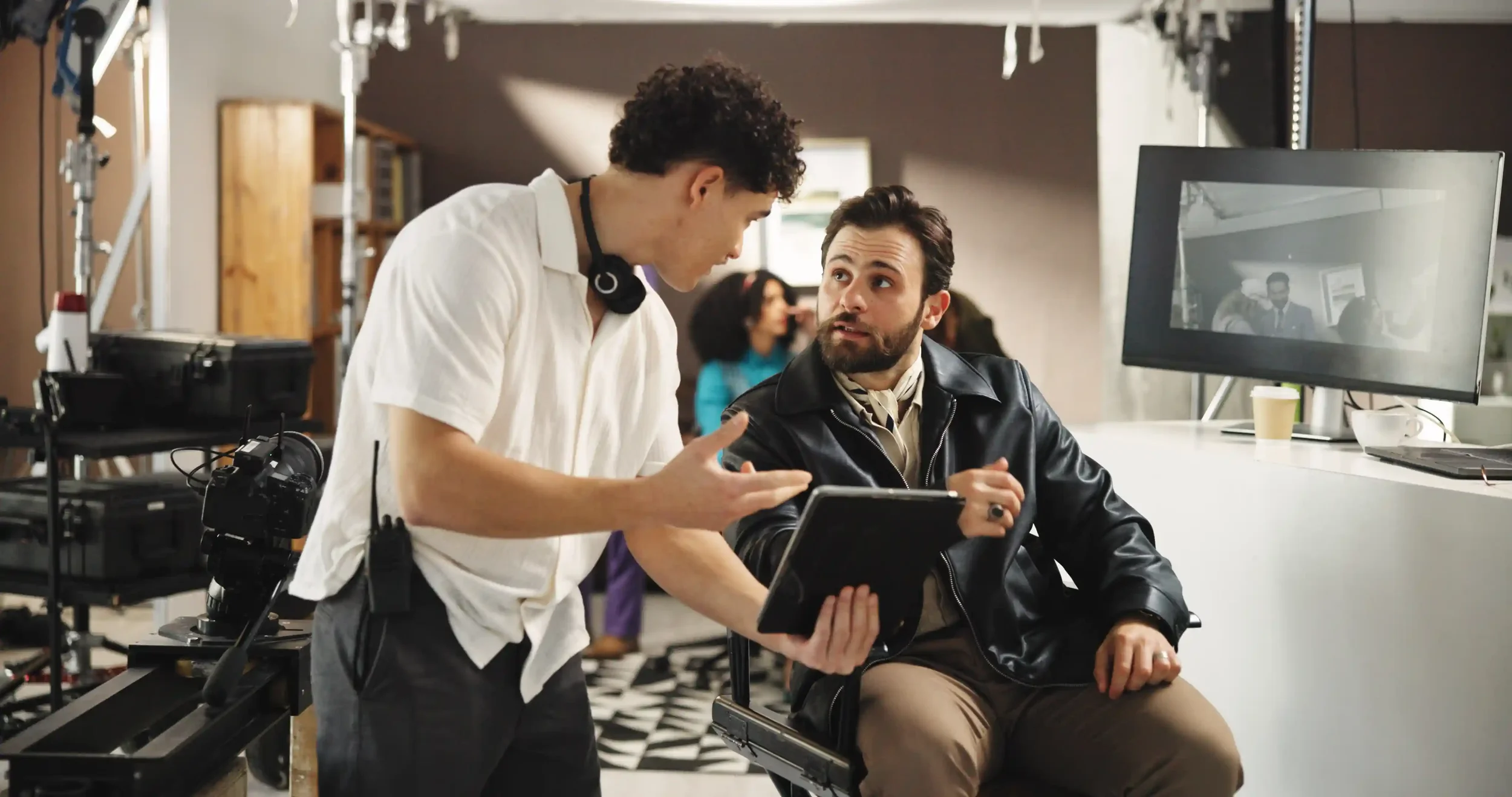
Choosing a video production company means investing thousands of dollars and significant time into content that will represent your brand. Pick the wrong partner, and you're stuck with mediocre content, blown budgets, and wasted time. Pick the right one, and you get video content that drives actual business results.
At Burt's Media, we've worked with clients who came to us after bad experiences with other production companies. We've heard the horror stories: agencies that overpromised and underdelivered, freelancers who disappeared mid-project, and companies that churned out cookie-cutter content without understanding the client's business.
This guide gives you a practical framework for evaluating video production companies. No fluff, no sales pitch—just honest advice on finding a partner who will create dang good content and actually deliver what they promise.
Start With Your Goals, Not Their Portfolio
Here's where most people start by looking at pretty videos on production company websites. But here's the truth—if you don't know what you're trying to accomplish, you can't evaluate whether a production company is right for you.
Define What Success Looks Like
Before you contact a single production company, answer these questions:
What business problem are you solving? Are you trying to increase brand awareness? Generate leads? Educate customers? Recruit employees? Your video's purpose drives every other decision. According to HubSpot's video marketing statistics, 91% of businesses use video as a marketing tool, making it essential to define your specific goals.
Who's your target audience? A video targeting Gen Z consumers needs a completely different approach than one aimed at B2B decision-makers in their 50s.
Where will this video live? Social media content requires different production than website videos or broadcast commercials. Platform matters.
What's your realistic budget? Don't say "whatever it takes." Have a number in mind. Be honest about it. This helps production companies recommend appropriate solutions.
How will you measure success? Views? Engagement? Leads? Sales? Define your metrics before production begins. Wistia's research shows that videos under 2 minutes get the most engagement, which is important to consider when setting performance goals.
Match Your Needs to Their Expertise
Once you know what you need, you can actually evaluate whether a production company fits. A company that makes beautiful cinematic brand films might not be the best choice for high-volume social media video content. A team that crushes short-form video might not have the bandwidth for multi-day commercial shoots.
Look for companies whose expertise aligns with your needs, not just companies whose work looks impressive.
Evaluate Their Work (The Right Way)
Now we can talk about portfolios—but you need to look deeper than surface-level production quality.
Look for Similar Projects
Don't just scroll through pretty videos. Specifically look for projects similar to what you need including similar industry or business type, similar video format and style, similar distribution platforms, and similar production scope.
If you need product videos but all they show are documentaries, that's a mismatch. If you need TikTok content but they only showcase 5-minute brand films, same problem.
Assess Strategic Thinking, Not Just Aesthetics
Anybody with a nice camera can create visually appealing footage. What separates good video production companies from great ones is strategic thinking. When reviewing their work, ask whether the video clearly communicates a message, whether it would resonate with the intended audience, whether it aligns with the brand's voice and positioning, and whether it would actually drive the intended business result.
Pretty videos that don't serve a strategic purpose are just expensive art projects.
Check for Consistency
One great video in a portfolio might be luck. Multiple great videos demonstrate capability. Look for consistent quality across projects, variety showing they can handle different styles, recent work (not just their best stuff from three years ago), and projects that actually launched rather than just spec work.
At Burt's, we're proud of our work because it shows range—from brand storytelling to social content to podcast production—all executed at a high level.
Vet Their Process and Communication
How a production company works often matters more than what they've produced. A talented but disorganized team will create headaches. A slightly less flashy but reliable team will deliver consistent results.
Assess Their Communication Style
Pay attention to every interaction during the vetting process:
Response Time: Do they respond to inquiries within a day? Or do you wait days for a reply? Their responsiveness during sales will only get worse after you sign.
Clarity: Do they explain things in plain English? Or hide behind industry jargon and technical terms?
Listening: Do they ask questions about your business and goals? Or do they immediately jump to pitching their services?
Professionalism: Are they organized, prepared, and respectful of your time? Or do they show up late, forget details, or seem scattered?
At Burt's, showing up on time is literally one of our four core promises. It sounds basic, but you'd be surprised how many companies can't manage this simple commitment.
Understand Their Production Process
Ask potential partners to walk you through their process from kickoff to delivery. A professional company should clearly explain how pre-production planning works, what happens on production day, their post-production and revision process, typical timelines for each phase, and how they handle feedback and changes.
If they can't articulate a clear process, they probably don't have one. And working without a clear process leads to confusion, missed deadlines, and poor results.
For a detailed look at what a good process should look like, check out our guide on the video production process.
Review Their Proposal Thoroughly
A professional proposal should include a detailed scope that outlines exactly what's included and not included, a clear timeline with start date, production dates, and delivery date, transparent pricing with a breakdown of costs and no hidden fees, a revision policy explaining how many rounds of changes are included, deliverables specifying formats, lengths, and files you'll receive, and contract terms covering payment schedule, ownership rights, and cancellation policy.
Vague proposals are red flags. If a company can't clearly outline what you're paying for, walk away.
Look Beyond the Price Tag
Price matters, but it shouldn't be your only (or even primary) consideration when choosing a video production company.
Understand What Drives Costs
Video production pricing varies based on crew size and experience level, equipment quality and specialization, pre-production complexity like scripting and storyboarding, production day length and difficulty, post-production intensity including editing, graphics, color, and sound, number of revision rounds, and deliverable format complexity.
Extremely low prices usually mean cutting corners somewhere—often inexperienced crew, poor equipment, rushed editing, or minimal revisions. Extremely high prices might include overhead for fancy offices and unnecessary production luxuries. The Video Marketing Institute provides detailed breakdowns of typical production costs to help you understand what's reasonable.
Look for companies that price fairly for their experience level and can explain exactly what you're paying for. For detailed pricing insights, read our breakdown on video production costs in Raleigh, NC.
Consider Total Value, Not Just Production Cost
A $3,000 video that generates $30,000 in business is a better investment than a $1,500 video that generates nothing. When evaluating value, consider strategic value (will this company help develop an effective strategy, or just execute your ideas without pushback?), production quality (will the final product represent your brand well?), efficiency (will they hit deadlines and respect your time?), and partnership potential (could this be an ongoing relationship for future projects?).
At Burt's, we've had clients tell us they could've hired someone cheaper—but they chose us because they trusted we'd deliver quality work without the drama. That's the difference between cost and value.
Verify Their Credentials and Experience
Not all video production companies are created equal. Some are established agencies with decades of experience. Others are talented freelancers operating as "companies." Neither is automatically better, but you should know what you're getting.
Check Their Track Record
How long have they been in business? Established companies have proven they can sustain operations and deliver consistently. Newer companies might offer competitive pricing but carry more risk.
Who have they worked with? Look for recognizable clients or brands similar to yours. If they've successfully served businesses like yours, they understand your industry's nuances.
What do past clients say? Read testimonials and reviews, but go deeper—ask for references you can actually call. A company confident in their work will happily connect you with past clients.
At Burt's, we're proud that clients like 321 Coffee, BrandBossHQ, and Kate Bowler trust us with their content. Their continued partnerships speak louder than any sales pitch we could make.
Assess Their Team Structure
Who will actually work on your project? The owner who meets with you might not be the person shooting or editing your video. Make sure you meet and approve of the team members who will handle your project.
Do they have in-house expertise or rely on contractors? Neither model is inherently better, but you should know. In-house teams offer more consistency. Contractor-based models can provide specialized expertise.
What's their capacity? A team that's too busy will rush your project. A team that's too slow might not be viable long-term. You want a company that's busy enough to be stable but not so overwhelmed they can't prioritize your work.
Test Their Creative Thinking
Technical skills matter, but creative thinking is what separates good videos from great ones. You want a production company that brings ideas to the table, not just executes whatever you tell them.
See How They Approach Problems
During initial conversations, present your project and see how they respond:
Do they ask thoughtful questions? Good companies dig deep to understand your business, audience, and goals before proposing solutions.
Do they challenge your assumptions? If you want a 5-minute video and they suggest three 60-second videos might work better, they're thinking strategically.
Do they offer multiple concepts? Companies comfortable with creative thinking will present options, not just one approach.
Do they explain their recommendations? They should articulate why certain creative choices make sense for your goals and audience.
Evaluate Their Content Strategy Knowledge
Creating great video is only half the battle. The other half is ensuring that video actually reaches and resonates with your target audience. Ask potential partners how you should distribute this video, what formats you need for different platforms, how you should promote this content, and how you can repurpose this into additional content.
Companies that only think about production, not distribution and strategy, are leaving money on the table. At Burt's, content strategy is core to what we do—we don't just make videos and wish you luck with them.
Consider Specialization vs. Generalization
Should you choose a specialist who focuses on one type of video, or a generalist who does everything? There's no universal right answer—it depends on your needs.
Benefits of Specialists
Specialists offer deep expertise because they live and breathe their niche. A company that only does podcast production knows every technical and creative nuance of that format. They also have efficient processes since doing the same thing repeatedly makes you really good at it, so specialists often work faster and smoother. Additionally, specialists usually have networks within their niche that are helpful for distribution, promotion, or ongoing content needs.
Benefits of Generalists
Generalists offer a one-stop shop since if you need various video types, they can handle everything without coordinating multiple vendors. Working with one team across different video types ensures consistent brand voice in your content. Generalists can also adapt approaches and blend techniques from different video styles.
At Burt's, we fall somewhere in between. We specialize in content marketing and video marketing, but within that space, we handle everything from short-form social content to brand films to podcast production. This gives clients the benefits of both approaches.
Watch for These Red Flags
Certain warning signs should make you think twice about working with a production company. Overpromising results is a major red flag since no ethical company can guarantee viral success, specific view counts, or immediate ROI. Anyone making these promises is being dishonest. Unclear pricing is another concern—if they won't provide clear pricing or keep adding "necessary" additions after quoting, find someone else.
Every legitimate production company has work they can show, so no portfolio means no experience. Poor communication during sales won't improve after you pay them, so if they're hard to reach, slow to respond, or confusing to communicate with, that's a warning sign. High-pressure sales tactics, artificial urgency, or making you feel bad for comparing options are all red flags.
Professional companies use contracts, so no contract means no protection for either party if something goes wrong. Finally, while you hired them for expertise, your input matters. Companies that dismiss your feedback or talk down to you aren't good partners.
Ask These Critical Questions
Before making your final decision, ask potential partners these questions:
About Their Work
Ask if they can show you examples of similar projects, who handled production and post-production on these examples, whether you can speak with 2-3 recent clients as references, and what makes their approach different from other production companies.
About Process and Timeline
Ask them to walk you through their process from contract to delivery, what a realistic timeline is for a project like yours, how they handle feedback and revisions, and what happens if you need to make changes after final delivery.
About Team and Resources
Ask who specifically will work on your project, whether you can meet the key team members before signing, what equipment and technical capabilities they have, and whether they have backup plans if key team members are unavailable.
About Business Practices
Ask what's included in their pricing and what costs extra, what their payment schedule is, who owns the final video and raw footage, what happens if the project goes over timeline or budget, and what their cancellation or refund policy is.
How they answer these questions tells you a lot. Confident, professional companies will answer directly and thoroughly. Dodgy answers or deflections are warning signs.
Making Your Final Decision
After vetting multiple companies, you'll hopefully have 2-3 strong options. Here's how to make your final choice:
Trust Your Gut
Data and research matter, but so does intuition. Ask yourself whether you trust this team, whether they understand your business and goals, whether you can see yourself working with them for months, and whether they seem genuinely invested in your success.
You'll be collaborating closely with your chosen production company. If something feels off, it probably is.
Imagine the Worst-Case Scenario
What if something goes wrong mid-project? Consider how each company would handle technical difficulties on production day, missing a deadline, you being unhappy with the first draft, or needing additional changes after final delivery.
The company you trust to handle problems professionally is often the right choice.
Consider Long-Term Partnership Potential
While you might only need one video right now, most businesses benefit from ongoing video content. Is this a company you could work with long-term? Ongoing relationships benefit both parties—they learn your brand deeply, and you get more efficient service.
Why Companies Choose Burt's Media
We're not shy about explaining why clients choose to work with us:
We Keep It Simple: No fluff, no ego, no unnecessarily complicated processes. We show up, do great work, and deliver what we promise. Our four core promises aren't marketing speak—they're how we actually operate.
We Think Strategically: We don't just execute your ideas—we help develop better ones. Our background in content marketing means we think beyond just making pretty videos.
We're Local Experts: Based in Raleigh, North Carolina, we understand the local market and can provide in-person service when needed. But we work with clients nationwide.
We Deliver Consistently: Our clients stick with us because we deliver quality work reliably. No drama, no surprises, no games.
We Care About Results: We measure success by whether our work drives actual business results, not just likes and views. Your success is our success.
Take Your Time, But Don't Overthink It
Choosing a video production company is an important decision, but it doesn't have to be agonizing. Use this framework: define your goals and needs clearly, research 3-5 companies that seem like potential fits, review their work with your specific needs in mind, have thorough conversations with your top 2-3 choices, check references and verify credentials, compare proposals carefully, and trust your gut and make a decision.
The "perfect" production company doesn't exist. You're looking for the best fit for your specific project, budget, and working style.
Ready to Find Your Video Production Partner?
If you're based in Raleigh, North Carolina, or anywhere else and need a content partner who will show up, do great work, and actually deliver what they promise, let's talk.
At Burt's Media, we create video content that drives real business results—from social media content to brand storytelling to podcast production and everything in between.
Get in touch and let's have an honest conversation about your goals. No pressure, no sales pitch—just straight talk about whether we're the right fit for your project.
We promise to show up on time, do what we say, create dang good content, and not quit until it's done right. That's not just what we promise—it's who we are.
Frequently Asked Questions
-
Professional video production typically ranges from $2,000-$10,000+ for most business videos, depending on complexity. Simple social content might cost $1,000-$3,000, while complex brand films can run $15,000-$50,000+. Define your budget early so production companies can recommend appropriate solutions.
-
Local companies offer in-person meetings, easier production logistics, and local market knowledge. Remote companies might offer lower costs or specialized expertise not available locally. Many projects work fine remotely, but if you value in-person collaboration, choose local.
-
Production companies typically have larger teams, more resources, and can handle bigger projects. Freelancers might offer lower rates and more personalized service but have limited capacity. Neither is inherently better—it depends on your project scope and budget.
-
Simple social videos take 1-2 weeks. Standard business videos require 4-6 weeks. Complex projects can take 2-3 months. Rush timelines are sometimes available for additional fees, but quality work takes time.
-
Ask about their process, timeline, team structure, pricing breakdown, revision policy, past client results, and what happens if you're unhappy with deliverables. Also ask for examples of similar projects and client references.
-
Sometimes yes, sometimes no. Higher prices often reflect more experience, better equipment, or superior service. But they can also reflect unnecessary overhead. Focus on value—what you get for the price—not just the price itself.
-
Professional companies include revision rounds (typically 2-3) in their contracts. If issues arise during these revisions, they should work with you to address them. After final approval, major changes usually require additional payment. This is why thorough review during the process is critical.
-
Some production companies focus purely on creation, others offer strategy and distribution support. If you need help getting your video seen, look for companies with content marketing or social media expertise, not just production skills.
